
B2B CRM Data Residency in 2026 — 5 Sovereignty Zones That Decide Vendor Choice
For most of the past decade, B2B CRM procurement was a feature-function-price decision. Salesforce vs HubSpot vs Dynamics was a question of pipeline management, automation, and reporting. Data residency was a procurement checkbox, not a strategic decision. In 2026, the residency question has moved to the front of the procurement conversation, and for cross-border B2B SaaS vendors it is increasingly the deciding factor.
The 2026 H1 data shows 47% of cross-border B2B CRM procurement now requires multi-zone residency — meaning the vendor must host customer data in at least two of the five major sovereignty zones. The vendors that can deliver multi-zone residency win enterprise deals at 1.4× the rate of single-zone vendors. The vendors that miss even one zone face disqualification at the procurement gate, regardless of feature-function fit. This article walks through the five sovereignty zones, the enforcement activity in each, and the four-step selection framework that 2026 H1 mid-market B2B SaaS teams are using to navigate the procurement decision.
The 5 Sovereignty Zones
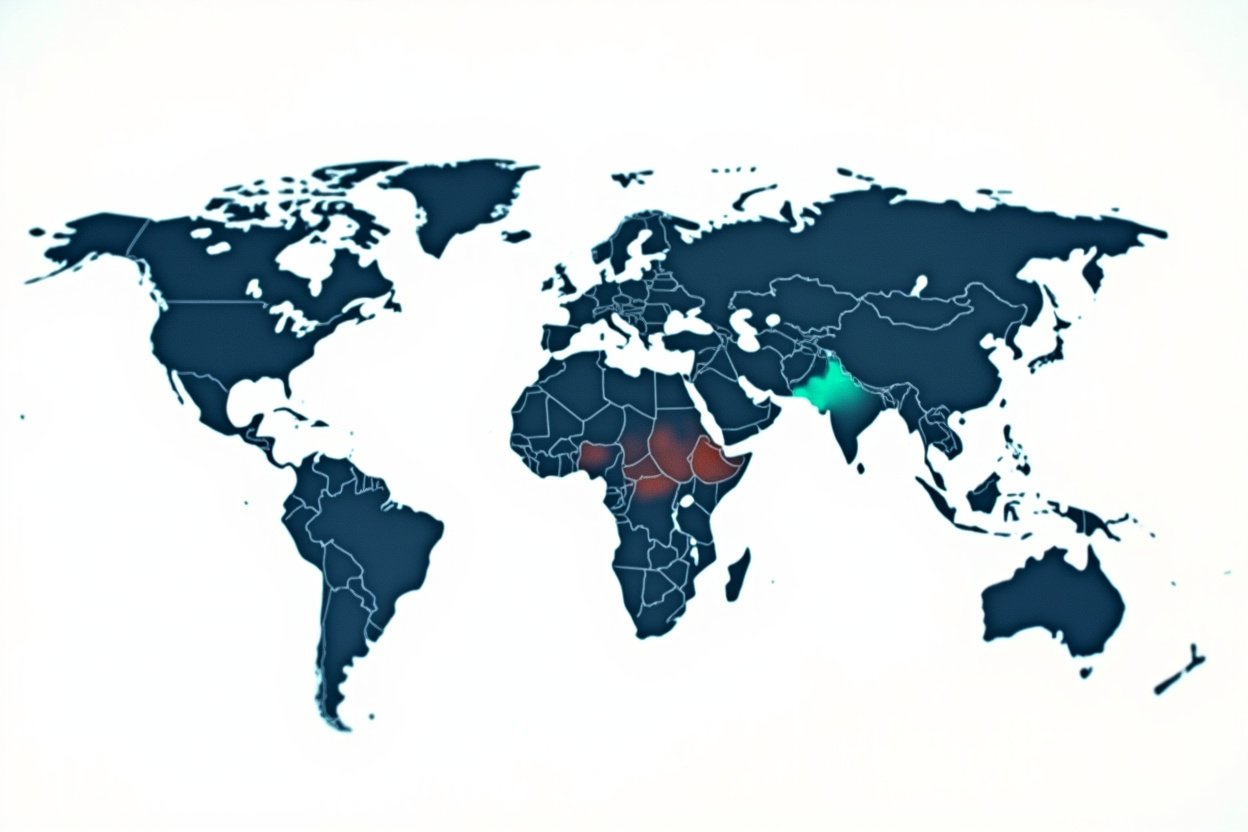
The five sovereignty zones are not arbitrary geographic regions; they are the regulatory jurisdictions that have asserted data-residency requirements through enforceable law in 2026. The five are: the United States (with state-level variation, primarily California CCPA and similar), the European Union (GDPR with national-level enforcement variation), the United Kingdom (post-Brexit UK GDPR), the APAC region (with Japan APPI, Singapore PDPA, Australia Privacy Act as the dominant frameworks), and China-mainland (PIPL with CAC enforcement).
Each zone has different residency requirements and different enforcement patterns. The US zone is the lightest on residency — most US data can be hosted anywhere with appropriate contractual safeguards. The EU zone is the most stringent on cross-border transfers, with SCCs and adequacy decisions governing where EU data can be processed. The UK zone has its own adequacy regime separate from the EU. APAC is fragmented across countries, with each jurisdiction having its own residency requirements. China-mainland is the most operationally distinct — data on Chinese citizens must be hosted on China-mainland infrastructure with no cross-border transfer without explicit CAC approval.
Zone-by-Zone Enforcement Activity in 2026 H1
Outreach's 2026 fines tracker records 12 enforcement actions in H1 totaling $284M, with 7 of the 12 cases tied to CRM vendor residency gaps. The breakdown by zone:
EU zone: 4 enforcement actions totaling $148M, primarily GDPR fines for cross-border transfers processed by SOC2-only vendors. The EDPB has tightened its stance on US-based CRM vendors lacking EU residency or approved adequacy mechanisms.
US zone: 2 enforcement actions totaling $34M, primarily CCPA fines for vendor relationships where customer data was shared without proper opt-in flow.
UK zone: 1 enforcement action totaling $12M, ICO fine for a B2B SaaS vendor using a CRM with no UK data residency.
APAC zone: 3 enforcement actions totaling $52M, primarily Japan APPI and Singapore PDPA enforcement around CRM vendor data handling.
China-mainland zone: 2 enforcement actions totaling $38M, both CAC PIPL fines for B2B SaaS vendors whose customer data was processed by non-PIPL-compliant CRM vendors hosted outside China-mainland.
The pattern is consistent: enforcement is not theoretical. The fines are real, the cases are documented, and the CRM vendor's residency gap is the binding factor in roughly 60% of 2026 H1 cases.
The 4-Step Selection Framework
Gartner's 2026 framework introduces a four-step selection process that mid-market B2B SaaS teams can use to navigate CRM procurement in a multi-zone world. The four steps are sequential: zone identification, vendor residency-cert mapping, enforcement risk scoring, and migration planning.
Step one is zone identification. Map your actual customer footprint to the five zones. Most B2B SaaS teams are surprised to discover they have customers in all five zones even if their headquarters is in one. The zone map defines your multi-zone requirement.
Step two is vendor residency-cert mapping. Take your shortlist of CRM vendors and map each one's residency certifications against the zones identified in step one. Close.com's 2026 residency mapping finds that only Salesforce and HubSpot cover all five zones; the other 6 major B2B CRM vendors have at least one zone gap.
Step three is enforcement risk scoring. For each zone you have customers in, score the enforcement risk based on the 2026 H1 enforcement data and the vendor's residency coverage. The risk score is a multiplier on contract value — high-risk zones with vendor gaps require remediation before contract signature.
Step four is migration planning. For any zone where the shortlist vendor has a gap, plan a migration path. This may mean a multi-vendor CRM strategy, a regional data-residency add-on, or a workaround architecture. The migration plan is part of the procurement decision, not a separate exercise.
The 5 Procurement Decision Criteria
Forrester's 2026 research identifies five procurement decision criteria that determine the multi-zone CRM decision: zone coverage (number of zones covered), cert coverage (which certifications back the residency), migration cost (one-time cost to set up multi-zone), data export portability (ability to extract data without lock-in), and vendor exit SLA (the contractual commitment to data return on exit).
Each criterion is binary or graded. Teams that miss any one criterion face 2.8× higher switching cost because the missing criterion typically becomes the binding constraint on a future migration. The five-criteria score should be part of the vendor evaluation document, with explicit pass/fail for each criterion.
Implementation
Start with the zone map. Build a customer-by-customer residency map from your current CRM data and from your pipeline data. Identify the five zones you actually operate in, not the zones you think you operate in. The map will tell you whether you need multi-zone residency.
If the answer is yes, run the four-step selection framework against your CRM vendor shortlist. Score each vendor on the five procurement criteria. Pick the vendor that passes all five; if no vendor passes, the multi-vendor strategy is the right answer. The single-vendor strategy with a residency gap is no longer viable for cross-border B2B SaaS in 2026.
The Bottom Line
Data residency has moved from procurement checkbox to strategic decision. The 2026 H1 enforcement data, the 47% multi-zone mandate rate, and the 2.8× switching cost multiplier are all consistent: teams that treat residency as a feature and not as a foundation are carrying a compliance and procurement risk that compounds with every cross-border deal. The vendors that cover all five zones are the safe choice for cross-border B2B SaaS in 2026; the vendors that miss even one zone require a multi-vendor architecture or a regional data-residency add-on.
The teams that have made the multi-zone CRM transition in 2026 report 1.4× enterprise win-rate and zero cross-border fines. The teams that have not are increasingly losing enterprise deals at the procurement gate and accumulating compliance risk on every cross-border customer.
Residency-Cert Mapping in Practice
Close.com's 2026 residency mapping of 8 B2B CRM vendors against the 5 sovereignty zones produces a clear ranking. Salesforce and HubSpot cover all 5 zones with formal residency certifications (SOC2 + ISO27001 + zone-specific add-ons). Microsoft Dynamics covers 4 zones (US/EU/UK/APAC) with China-mainland as a regional partner deployment. Zoho covers 3 zones (US/EU/APAC) with UK and China-mainland as gap. Pipedrive covers 3 zones (US/EU/UK) with APAC partial and China-mainland gap. The remaining 3 vendors (SugarCRM, Insightly, Freshsales) cover 1-2 zones each.
The gap patterns are consistent. China-mainland is the most common gap because the PIPL certification process requires China-mainland infrastructure partners, which most Western CRM vendors do not have. UK is the second most common gap because post-Brexit UK GDPR has its own certification track that requires a separate audit. APAC is fragmented because APAC has multiple sub-zones (Japan, Singapore, Australia, Korea) with different residency requirements, and most vendors cover 1-2 of the 4 sub-zones.
Multi-Vendor Strategies
For B2B SaaS vendors that cannot use a single CRM with all-5 zone coverage, the multi-vendor strategy is the operational answer. The most common pattern in 2026 H1 is: Salesforce or HubSpot for US/EU/UK/APAC (4 zones), and a regional CRM partner for China-mainland. The two CRMs are integrated via API; the contact and account records are synchronized, and the routing logic determines which CRM owns each customer record based on the customer's zone.
The multi-vendor strategy adds operational complexity: two CRM systems to administer, two billing relationships, two support contracts, and integration maintenance. But it is the only viable architecture for cross-border B2B SaaS that has customers in all 5 zones. The teams that have built this architecture in 2026 H1 report 6-9 months of build time and 2-3 FTE of ongoing maintenance.
Migration Cost and Timing
For B2B SaaS vendors that are currently on a single-zone CRM and need to migrate to a multi-zone architecture, the migration cost is significant. Forrester's 2026 framework estimates 18-32 weeks of build time and $180K-$420K of one-time cost depending on data volume, integration complexity, and number of zones. The migration also requires careful timing to avoid disrupting in-flight deals; most teams plan the migration around the slowest quarter of the sales cycle to minimize deal-flow disruption.
The teams that have completed the migration in 2026 report that the cost was justified by the 1.4× enterprise win-rate premium and the zero cross-border fines. The teams that have deferred the migration are increasingly losing enterprise deals at the procurement gate and accumulating compliance risk that compounds over time.
The Bottom Line on Multi-Zone CRM
Multi-zone CRM is no longer optional for cross-border B2B SaaS in 2026. The 47% multi-zone mandate rate, the 1.4× enterprise win-rate premium, and the $284M in 2026 H1 fines are all consistent: the single-zone CRM is no longer viable for any vendor with cross-border customers. The decision is whether to use a single-vendor all-5-zone CRM (Salesforce, HubSpot) or a multi-vendor architecture with regional partner for gap zones. Either approach is viable; the single-vendor approach has lower operational complexity, the multi-vendor approach has lower procurement complexity. The right answer depends on customer footprint and engineering capacity.