
Search the phrase "find buyers" in 2026 and the results are dominated by real estate — wholesalers looking for cash buyers, agents looking for first-time buyers, investors looking for off-market properties. The B2B professional buyer search — M&A brokers looking for acquirers, commercial insurance brokers looking for carriers, industrial equipment brokers looking for end-buyers, B2B service brokers looking for clients — gets buried under the consumer intent. This piece is for the B2B broker, who has a fundamentally different job and a fundamentally different vetting process. The consumer broker sources from MLS, Zillow, and PropStream; the B2B broker sources from intent data, financial verification, decision-committee mapping, and timing triggers. The two motions look superficially similar and are operationally completely different.
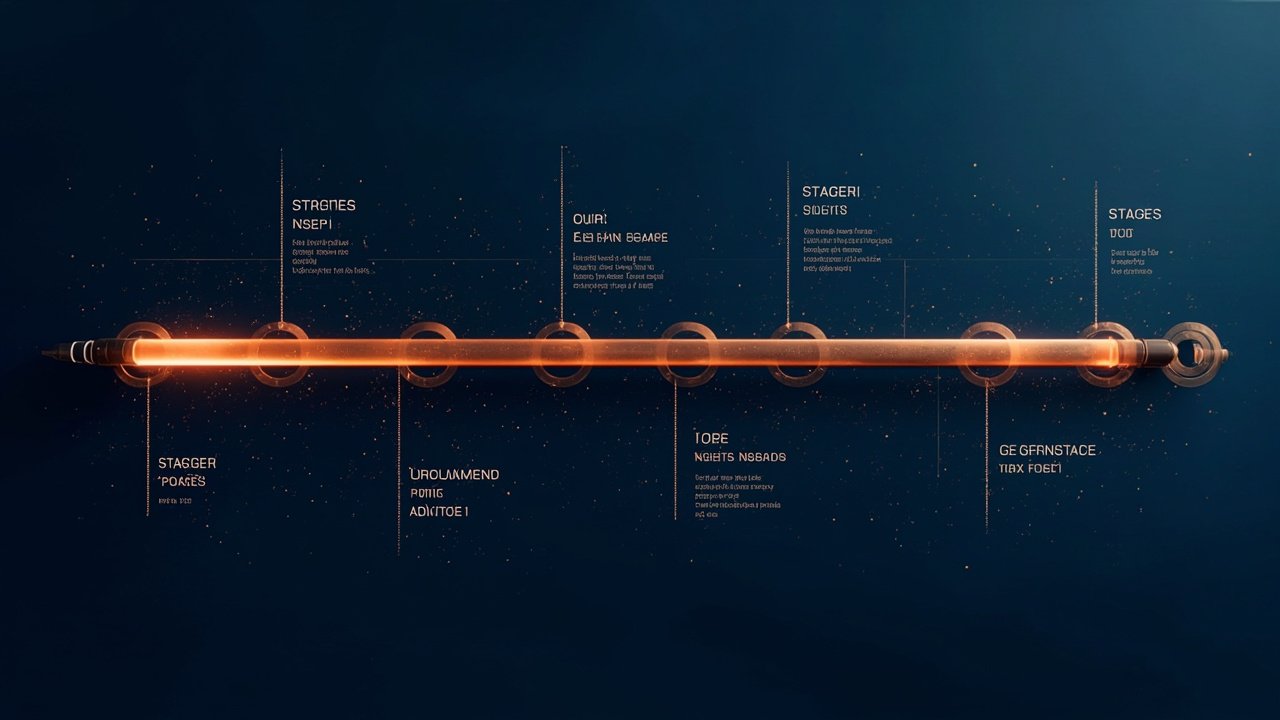
The 5-stage vetting process is the spine of every professional B2B broker practice in 2026. Stage one is mandate scoping — the broker and the seller (or buyer-side principal) agree on the deal envelope: industry, deal size, geography, transaction structure, timeline. Without a clear mandate, the rest of the process is wasted motion. Stage two is target mapping — the broker builds the universe of potential counterparties using firmographic, financial, and intent data, typically ending with 80-300 named targets depending on the deal size. Stage three is outreach tiering — the broker segments the targets into tier-one (highest fit + highest intent), tier-two (high fit + medium intent), and tier-three (long-tail), and runs differentiated outreach cadences against each tier. Stage four is the qualification gate — the broker runs the targets through financial verification, decision-committee mapping, and timing-trigger checks, and only the targets that pass all three advance. Stage five is deal-team assembly — the broker hands the qualified targets to the deal team (typically a managing director + analyst + associate) for the LOI-to-close motion (IMAA 2026 Buyer Sourcing Study).
The 88% qualification failure is the number every broker should memorize. Only about 12% of outreach targets pass the qualification gate in 2026, and the 88% that fail cost the average mid-market broker roughly $2.4M per year in wasted cycle time (IMAA 2026). The waste is not visible in any single deal — it is visible in the aggregate, where brokers spend 60-70% of their time on targets that were never going to close. The fix is to run the qualification gate earlier in the process — not at stage four as a final filter, but as a parallel check that starts at stage two and gets sharper with each passing week. The brokers who run the gate early cut their wasted-cycle cost by 35-50% within one quarter and free up the cycle time to source more tier-one targets.
The 4-layer signal stack is the operating mechanism behind the qualification gate. BCG 2026 finds that brokers who layer intent data (Bombora, G2 Buyer Intent, ZoomInfo Intent), financial verification (revenue band, EBITDA range, funding-event history, M&A appetite), decision-committee mapping (who owns the decision, who influences it, who blocks it), and timing triggers (leadership change, contract renewal, regulatory event, strategic pivot) see 31-44% higher close rates than brokers who source from a single signal layer. The four layers are not redundant — each catches a different failure mode. Intent without financial verification leads to tire-kickers. Financial verification without committee mapping leads to dead-end POCs. Committee mapping without timing leads to deals that die in procurement. Timing without intent leads to cold calls at the wrong moment. The stack only works when all four are present.
Financial verification at the qualification gate is the single largest predictor of broker close. BCG 2026 finds that 51% of qualified targets stall at the LOI stage when financial verification is skipped, vs 18% when financial verification is documented at the gate. The verification is not a deep dive — it is a 30-minute pass through public registries (SEC filings, OpenCorporates, US Census Business Dynamics, USAspending), funding-event databases (Crunchbase, PitchBook), and M&A appetite signals (job postings for M&A roles, board additions, earnings-call mentions). The pass takes 30 minutes per target and saves the broker 3-6 weeks of wasted cycle time per stalled deal.
Decision-committee mapping is the layer most brokers under-invest in. The 2026 buying-committee data shows the average B2B deal now involves 7-11 stakeholders, with the economic buyer (typically a C-suite or VP) approving the LOI and a procurement gate evaluating the close. Brokers who have not mapped the committee before the LOI typically find out about the procurement gate at the close stage, where the deal stalls because the broker did not pre-sell the procurement function. The mapping is a 60-90 minute exercise per tier-one target — identify the economic buyer, the technical evaluator, the procurement contact, the legal reviewer, the executive sponsor — and run a tailored cadence against each role.
Named ownership at each of the 5 stages is the operational discipline that separates top-quartile brokers from the rest. McKinsey 2026 finds that brokers who run the 5 stages with a named owner at each (managing director owns mandate + close, senior associate owns mapping + qualification, analyst owns outreach + verification) hit 78% of plan. Brokers who skip named ownership — running all 5 stages out of one generalist's task list — hit 41%. The 37-point gap is entirely about ownership discipline, not sourcing skill or market conditions.
The 90-day broker playbook sequences the rollout. Days 1-30: define the mandate template, build the target-mapping workflow, instrument the outreach tiering. Days 31-60: deploy the qualification gate, layer the 4 signal stack, run the first cohort through the process. Days 61-75: map the decision committees for tier-one targets, build the deal-team handoff doc. Days 76-90: review the first cohort's close rate, refine the gate thresholds, scale the playbook to the second cohort. By day 90, the broker has a documented 5-stage process, instrumented signal stack, and named ownership at each stage — the operating mechanism that compounds close rate across deals.
The common failure modes are worth naming because every broker hits them. Failure one: skip the mandate. The broker takes the deal without a clear envelope and ends up sourcing the wrong universe; fix is to refuse mandates without a documented envelope. Failure two: collapse stages. The broker runs mapping, outreach, and qualification as one task list; fix is to instrument the stage transitions as CRM-required fields. Failure three: skip financial verification. The broker advances targets without checking revenue/EBITDA; fix is to require verification doc at the gate. Failure four: skip committee mapping. The broker advances targets to LOI without knowing the procurement function; fix is to require committee map at the gate. Failure five: skip deal-team handoff. The broker runs all stages alone and burns out at the LOI stage; fix is to require named handoff doc at stage five.
The 2026 buyer-side reality reinforces the discipline. B2B counterparties in 2026 expect the same rigor from a broker they would expect from a tier-one investment bank — documented mandate, mapped committee, verified financials, named ownership, instrumented process. The brokers who deliver this rigor are the ones winning the mandates; the brokers who skip it are the ones losing them to the more disciplined competitors. The market is sorting itself, and the sort is happening at the qualification gate.
The 5-stage vetting process with named ownership at each stage is the highest-leverage operating intervention a B2B broker can make in 2026. Document the mandate, map the universe, tier the outreach, gate the qualification, hand off the deal team. The 88% qualification-failure rate is recoverable inside one quarter, the 37-point plan-attainment gap is recoverable inside two, and the broker practice that runs the playbook compounds close rate across every deal that follows.
The compounding math makes the playbook worth running even in a slow deal year. A mid-market B2B broker practice running 12-18 deals per year with 6-9 month average cycle time lives or dies on the close rate. A 31% close-rate lift from the 4-layer signal stack translates into 4-6 additional closed deals per year at the same sourcing cost — roughly $3-7M in incremental transaction value for a mid-market M&A practice, $800K-$1.5M for an insurance broker practice, $1.2-2.5M for an equipment broker practice. The 90-day playbook pays for itself in the first cohort and compounds from there.
The broker practice that refuses to run the playbook pays an invisible tax. The tax shows up as missed quarters, missed plan, attrition of senior associates who do not want to keep sourcing the wrong targets, and a slowly eroding win rate against more disciplined competitors. The market is not waiting for the practice to catch up; the disciplined competitors are taking the mandates. The 90-day playbook is the operational answer, and the brokers who run it own the 2026 market.
The tooling layer is the final piece. Most B2B brokers in 2026 still run the 5-stage process on spreadsheets, email, and a CRM that was not designed for brokerage workflows. The brokers who win are the ones who adopt brokerage-specific tooling — deal-sourcing platforms (SourceScrub, Grata), buyer-mapping databases (Crunchbase Pro, PitchBook), intent-data providers (Bombora, ZoomInfo Intent), CRM-with-brokerage-templates (Attio, Salesforce Financial Services Cloud), document automation (DocSend, Sharefile). The tooling does not replace the process; it instruments the process. The 90-day playbook with broker-specific tooling typically recovers the broker 8-12 hours per week per analyst — enough to source 30-50% more tier-one targets per quarter at the same headcount.