
LinkedIn as a B2B Prospecting Channel in 2026 — When It Wins, When It Loses, and the 5-Step System That Works
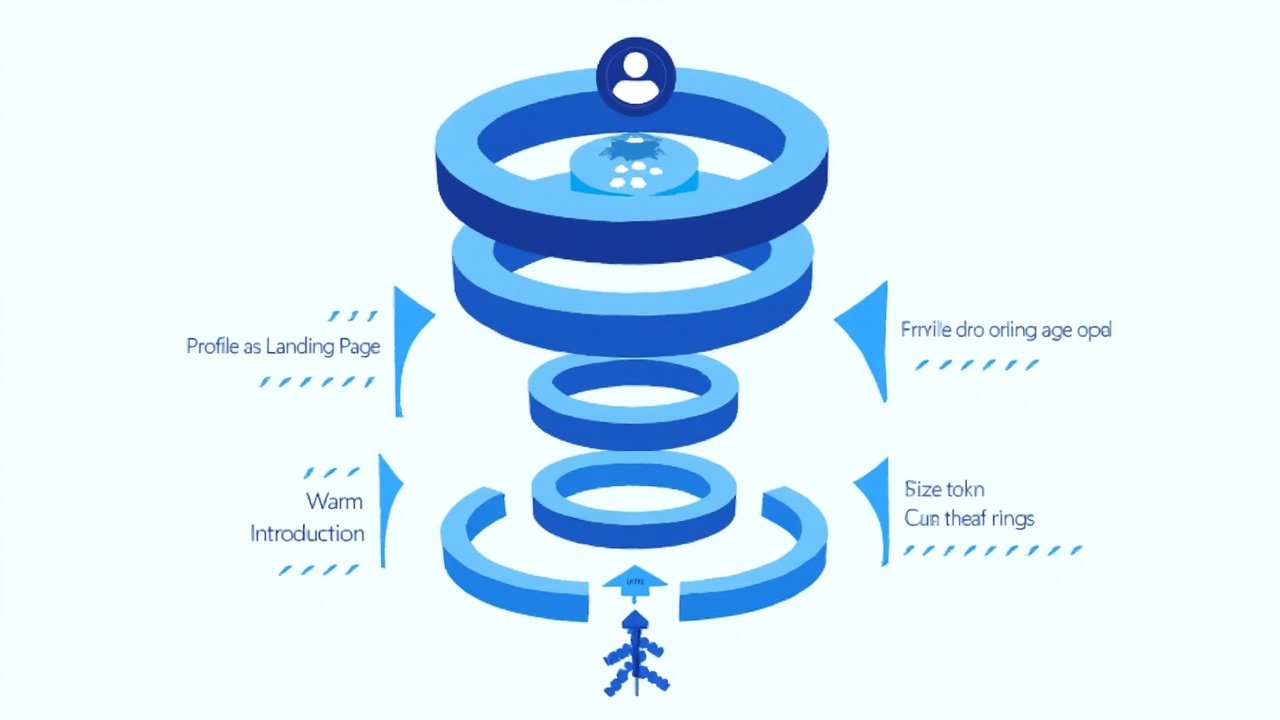
LinkedIn in 2026 is not a send-a-message channel. It is a buyer-research, signal-detection, and relationship-warming system, and the five steps map directly to those three layers. Used as a broadcast, LinkedIn produces low reply rates, low meeting quality, and low opportunity conversion. Used as a system, it produces reliable pipeline contribution, especially in mid-market and enterprise tiers.
LinkedIn Sales Solutions’ 2026 Sales Navigator material reports that buyer-side research (profile visits, content engagement, signal-watch) precedes the first outbound message in 64% of converted opportunities, and that profiles viewed as buyer-first landing pages earn 2.8x more accepted connections. The 64% number is the headline: most opportunities start before the first message is sent. The 2.8x number is the consequence: a profile that reads like a buyer’s first impression beats a profile that reads like a personal bio.
SalesHive’s 2026 LinkedIn outreach benchmarks note that 2026 connection acceptance averages 18–25%, message reply averages 8–12%, and opportunity conversion averages 1.5–3% across B2B prospecting programs. Those numbers are averages. A system that follows the five steps will sit above the average on each line; a broadcast approach will sit below.
Step 1 — profile as a landing page
The first step is to treat the seller’s profile as a landing page for the buyer, not a personal bio. A profile-as-landing-page states the buyer’s problem in the headline, lists the kinds of companies and roles the seller serves, and gives one example of a relevant outcome. It does not list the seller’s hobbies, awards, or job history. The buyer reads the profile to decide whether the seller is relevant; the seller’s job is to make that decision easy.
HubSpot’s 2026 LinkedIn prospecting playbook reports that warm-introduction and multi-thread sequences outperform single-thread connection requests by 3.1x in opportunity conversion. The profile is the first step in a multi-thread sequence, because it tells the buyer who else at the company might be worth a connection.
Step 2 — signal-watch
The second step is signal-watch. The signals are observable: job changes, posts, comments, hiring, new product launches, new offices, regulatory disclosures, and industry event attendance. Demandbase’s 2026 account intent material notes that signal-watch requires 2–3 quarters of consistent observation for the longer-cycle signals to become reliable, but the short-cycle signals (job change, post, comment) are immediately actionable.
A signal-watch routine is a daily 15-minute review of a target account list, not a quarterly deep dive. The routine is small and repeatable. The discipline is to record the signal, the date, and the next hypothesis. A signal without a hypothesis is a notification, not intelligence.
Step 3 — warm-introduction
The third step is warm-introduction. A warm introduction is a connection request sent after a signal, a relevant comment, or a shared experience, not a generic “let’s connect.” SalesHive’s 2026 benchmarks note that warm-introduction requests have materially higher acceptance and reply rates than cold connection requests. The mechanism is reciprocity: a signal-aware request looks like research; a generic request looks like spam.
Expanded Ramblings’ 2026 LinkedIn B2B benchmarks show that content-as-trust (industry commentary, problem framing, role-relevant posts) increases warm-introduction response rate by approximately 41% compared with profiles that lack content. The content does not need to be original research; it needs to be role-relevant and recent.
Step 4 — content as trust
The fourth step is content-as-trust. A seller who posts weekly about the buyer’s problem, who comments thoughtfully on industry posts, and who shares relevant case material becomes recognizable. The buyer may not respond to the first message, but they will recognize the seller’s name when the second or third signal appears. Recognition is a multiplier on every later step.
Social Insider’s 2026 LinkedIn engagement research finds that signal-watch plus multi-thread nurture has a 2.4x higher SQL conversion than single-thread connection requests, especially in mid-market and enterprise tiers. The content step is what makes the multi-thread nurture possible, because the buyer can route the content to a colleague with a credible reason.
Step 5 — multi-thread nurture
The fifth step is multi-thread nurture. A single connection request reaches one person; a multi-thread sequence reaches three to five. The threads are not duplicates. Each thread speaks to a different role: the user sees the workflow, the technical evaluator sees the architecture, the procurement lead sees the total cost, the executive sees the business consequence. The threads share a hypothesis, but the message is role-aware.
HubSpot’s 2026 LinkedIn prospecting playbook notes that multi-thread sequences have materially shorter cycle length than single-thread sequences. The mechanism is not parallelism; it is that each thread can answer a different objection, and the deal can move because every objection is addressed.
When LinkedIn loses
LinkedIn loses when the seller uses it as a broadcast, when the profile is a personal bio instead of a landing page, when the connection requests are generic, when the messages ignore the signal, and when the sequence is single-thread. LinkedIn also loses when the target buyer is not on the platform, when the buying committee is small and the entry point is a personal relationship, or when the deal is so high-value that in-person introductions are required regardless.
The decision to use LinkedIn is not a binary. It is a fit question. Use the five steps when the buyer is on the platform, when the committee is larger than two, when the deal is mid-market or enterprise, and when the seller can sustain the discipline. Use a different channel when the buyer is not on the platform, when the committee is small, or when the seller cannot sustain the discipline.
A 30-day reset
Pick one target account list for 30 days. Apply the five steps. At the end of the 30 days, compare pipeline contribution, connection acceptance, reply rate, and meeting quality against the prior broadcast approach. The numbers will tell the team whether LinkedIn is a system or a broadcast for them.
Salebrate helps keep signal-watch and multi-thread activity visible so the team does not slip back into a single-thread default. The five steps are not new. What is new in 2026 is the data system that makes the steps visible. ## How to start the practice
Start the five-step practice with one target account list and 30 days. The list should be 20–50 accounts, large enough to generate signal, small enough to review daily. Pick the list based on a real ICP, not a generic industry filter.
In the first week, audit the profiles of the sellers who will run the list. Each profile should read as a buyer’s first impression. Rewrite the headlines, the about sections, and the featured sections. The rewrites should mention the buyer’s problem, the kinds of companies and roles served, and one example outcome. Remove personal bio content.
In the second week, run the signal-watch routine daily. Spend 15 minutes per day on the target list. Record the signals: job change, post, comment, hiring, event attendance, regulatory disclosure. For each signal, write the hypothesis and the next step. The signals without a hypothesis are notifications, not intelligence.
In the third week, send warm-introduction requests based on the signals. Each request should reference the signal, not the seller’s need. The first follow-up message should add one piece of role-relevant content. The second follow-up should add a second piece. The third follow-up should close the thread or move it to a different channel.
In the fourth week, write the team’s LinkedIn protocol. The protocol is one page: how the profile should read, how the signal-watch routine runs, how warm-introduction requests are written, how content is posted, how multi-thread sequences are structured. The protocol is the artifact the team will use next quarter, and the artifact the next seller will read on day one.
Common objections
The first objection is that LinkedIn does not work for our market. The answer is that LinkedIn works when the buyer is on the platform, the committee is larger than two, and the deal is mid-market or enterprise. If those conditions do not hold, use a different channel.
The second objection is that the connection acceptance rate is too low. The answer is that a connection acceptance rate of 18–25% is the average, and a warm-introduction request sits above the average. The fix is signal-watch, not volume.
The third objection is that the message reply rate is too low. The answer is that a message reply rate of 8–12% is the average, and a role-aware follow-up sits above the average. The fix is multi-thread nurture, not longer messages.
The fourth objection is that opportunity conversion is too low. The answer is that an opportunity conversion of 1.5–3% is the average, and a multi-thread sequence with content-as-trust sits above the average. The fix is the five steps, not a different channel.
What this changes
The five-step system changes three things. First, the team stops using LinkedIn as a broadcast. Second, the team’s connection acceptance, reply, and opportunity conversion rates move above the average. Third, the team’s meeting quality improves, because warm-introduction requests reach buyers who have seen the seller’s signal-watch and content.
The system is not a magic channel. It is a discipline. The discipline compounds. After two quarters, the team’s signal-watch becomes sharper. After three quarters, the multi-thread nurture becomes routine. After four quarters, LinkedIn becomes a reliable pipeline contribution, not a hopeful experiment.
The five steps are not new. What is new in 2026 is the data system that makes the steps visible. Salebrate helps keep signal-watch and multi-thread activity visible so the team does not slip back into a single-thread default.