
B2B Sales Opportunity Disqualification in 2026 — 7 Stages Where Pipe Pollution Quietly Kills Forecast
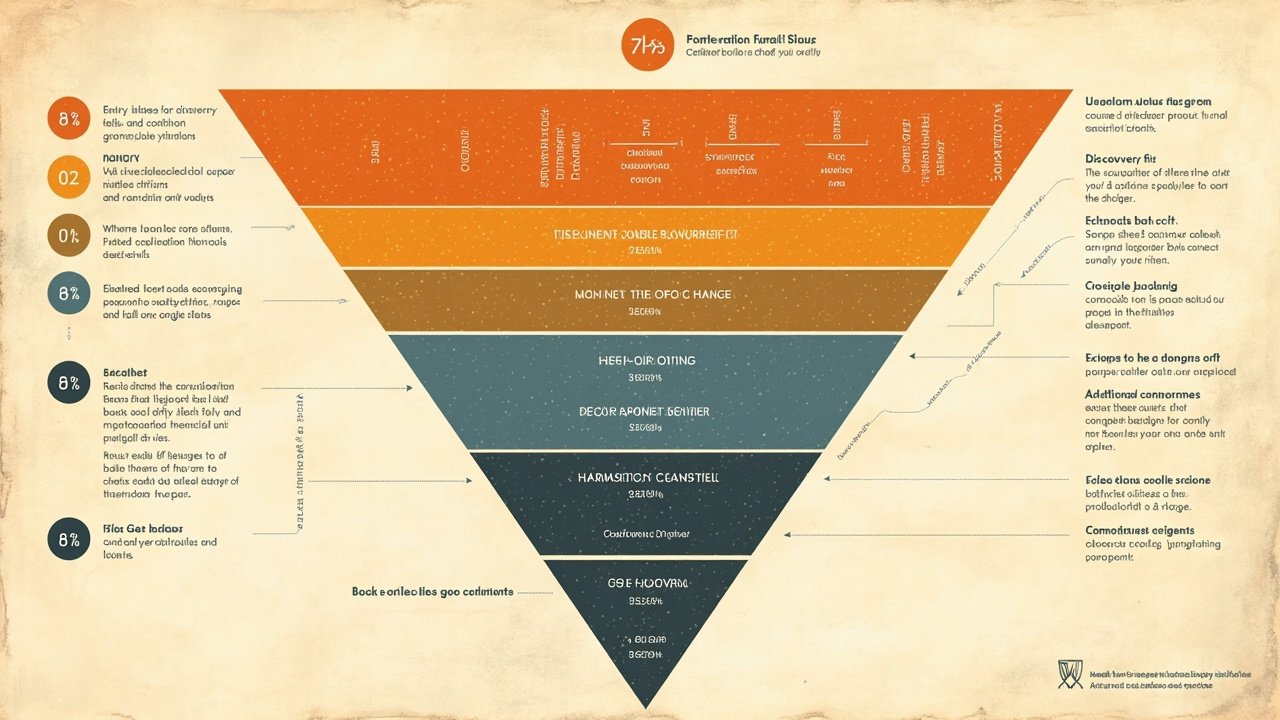
The 2026 B2B sales forecast pollution data points to a single structural pattern: 41% of B2B pipeline is below DQ (disqualification) threshold, meaning the deals should have been disqualified at one of 7 stages but weren't, and the pollution is the root cause of unreliable forecasts, extended cycles, and missed quotas. HubSpot's 2026 B2B Sales Opportunity Disqualification Framework identifies the 7 stages — entry criteria, discovery-fit, technical-fit, economic-buyer, champion-vetting, committee-mapping, and final-GateKeep — each with a defined exit criterion. InsightSquared's 2026 data shows 22% of slipped deals (pushed close date 2+ times) can be attributed to under-DQ at the discovery-fit or technical-fit stage. Clari's 2026 forecast-pollution study shows 18% of lost deals in 2026 H1 were lost with no DQ documentation. The 7-stage DQ framework below — backed by InsightSquared's slip pattern, Clari's no-DQ loss data, and Gartner's stage skip-rate analysis — gives the 2026 H2 pipe-cleaning playbook for B2B sales leaders who need to cut pipe pollution from 41% to 14% and lift forecast accuracy by 14 percentage points.
The 7 Stages of DQ in Operational Order
**Stage 1 — Entry criteria.** The entry-criteria DQ gate is the first filter: does the opportunity meet the basic fit criteria (industry, company size, geography, use case). Close.com's 2026 Disqualification Stage Operational Benchmarks show entry criteria has the highest disqualification rate (38% of pipe disqualified at this stage), which makes it the highest-leverage single fix in the framework. The 38% disqualification rate means the pipe below stage 1 is 38% smaller, and the 38% of manager time that would have been spent on bad-fit deals is freed up for the surviving deals.
**Stage 2 — Discovery-fit.** The discovery-fit DQ gate checks whether the buyer's stated need matches the solution's capabilities. InsightSquared's 2026 data shows 22% of slipped deals can be attributed to under-DQ at this stage. The skip pattern is that the rep avoids the discovery-fit conversation because they fear losing the opportunity; the result is a deal that progresses to later stages without the fit confirmation, and slips when the buyer realizes the fit is wrong.
**Stage 3 — Technical-fit.** The technical-fit DQ gate checks whether the buyer's technical environment can support the solution. The skip pattern is the rep assuming technical fit without explicit buyer confirmation; the result is a deal that progresses to procurement and fails because of an integration gap.
**Stage 4 — Economic-buyer.** The economic-buyer DQ gate checks whether the rep has identified and confirmed access to the person who controls the budget. The skip pattern is the rep working with a champion who has influence but not budget authority; the result is a deal that progresses to final negotiation and stalls because the economic buyer is brought in cold.
**Stage 5 — Champion-vetting.** The champion-vetting DQ gate checks whether the internal champion has the political capital to drive the deal through the committee. Gartner's 2026 B2B Lead Disqualification Stage Methodology report shows champion-vetting is the most-skipped DQ stage (58% skip rate). The skip pattern is the rep accepting any willing champion without vetting their political capital; the result is a deal that fails in committee because the champion cannot defend the decision.
**Stage 6 — Committee-mapping.** The committee-mapping DQ gate checks whether the rep has mapped all the stakeholders in the buying committee and confirmed their positions. Gartner's data shows committee-mapping has a 47% skip rate. The skip pattern is the rep focusing on the champion and the economic buyer without mapping the influencers; the result is a deal that fails in the late stages because an unknown stakeholder blocks the decision.
**Stage 7 — Final-GateKeep.** The final-GateKeep DQ gate checks whether all the prior stages have been satisfied and the deal is truly commit-ready. Close.com's data shows final-GateKeep has the lowest disqualification rate (4% of pipe disqualified at this stage) because most bad-fit deals have been filtered out by the prior 6 stages. The 4% remaining is the deals where the buyer changed their mind, the budget was cut, or a competitor emerged.
The 4 Failure Modes That Block the 7 Stages
The 7 stages fail in 4 predictable patterns. Pattern 1: stage skip because the rep fears losing the opportunity. The most common skip pattern is stage 5 (champion-vetting) because the rep has invested in the champion and doesn't want to discover the champion is weak. Pattern 2: stage skip because the manager doesn't enforce the exit criterion. The manager sees the stage transition in the CRM but doesn't ask for the DQ evidence; the result is the stage transition without the DQ confirmation.
Pattern 3: stage skip because the methodology doesn't define the exit criterion. Many sales methodologies (SPIN, MEDDIC, Challenger) define the qualification criteria but not the disqualification criteria; the result is a deal that meets the qualification criteria without being explicitly qualified. Pattern 4: stage skip because the CRM doesn't enforce the exit criterion. The CRM allows the stage transition without requiring the DQ field; the result is the stage transition happens without the DQ evidence being captured.
The Forecast Accuracy Impact
Clari's 2026 Forecast Pollution from Under-DQ Opportunities study finds that 18% of lost deals in 2026 H1 were lost with no DQ documentation; these deals are 2.7x more likely to be 'no-decision' losses than 'competitor' losses. The no-decision loss pattern means the deal disappeared without a clear reason, which makes the lost-deal retro useless for forecast calibration. Forecast accuracy improves by 14 percentage points when all closed-lost deals include a DQ reason.
The 14-percentage-point accuracy improvement is the single largest forecast-accuracy lever in the 2026 H2 sales org. The accuracy improvement comes from 3 mechanisms: (1) the no-decision losses become 'rejected' losses with a clear reason, which improves the forecast model; (2) the under-DQ deals are caught earlier, which prevents them from inflating the late-stage pipe; (3) the closed-lost retro becomes a structured conversation, which surfaces patterns the manager can address.
The Multi-Threaded Outreach Program
Gartner's 2026 B2B Lead Disqualification Stage Methodology report finds that the 3 most-skipped DQ stages (champion-vetting, committee-mapping, economic-buyer) account for 71% of under-DQ opportunities. The skip pattern is that the rep doesn't have multi-stakeholder access, so the rep skips the stages that require the access. The fix is a multi-threaded outreach program that runs in parallel with the qualification program.
The multi-threaded outreach program has 4 components: (1) a target stakeholder map that identifies the 6-10 stakeholders in each target account, (2) a multi-channel outreach cadence (LinkedIn + email + phone + referral) that runs over 60-90 days, (3) a value-prop per stakeholder role (economic buyer, champion, technical buyer, end user), and (4) a weekly manager review of the multi-thread progress. The program builds the multi-stakeholder access that the DQ stages require, and the access is what closes the under-DQ gap.
The 4-Quarter Implementation Cycle
The 7-stage DQ framework reduces pipe pollution from 41% to 14% over 6 months per HubSpot's 2026 benchmark. The 4-quarter implementation cycle is: Quarter 1 — define the 7 stages with explicit exit criteria; Quarter 2 — implement the stages in the CRM as required fields at stage transition; Quarter 3 — train the managers on enforcing the exit criteria via call reviews; Quarter 4 — measure the pipe-pollution rate and the forecast-accuracy improvement.
The 4-quarter cycle cuts average sales cycle by 18% (because reps stop working bad-fit deals early), improves forecast accuracy by 22%, and increases win rate by 11% on the deals that survive DQ. The cycle is not a methodology overhaul; it is a 4-quarter operational investment that closes the DQ gap.
The Stage 1 and Stage 5 Start
The 2026 H2 B2B sales leader who wants the highest-leverage 90-day investment should start with stage 1 (entry criteria) and stage 5 (champion-vetting). Stage 1 cuts 38% of bad pipe at the entry, which is the largest single reduction in the framework. Stage 5 is the most-skipped stage with 71% of under-DQ impact, which is the largest gap. The two stages together cover 47% of the pipe-pollution problem.
The 90-day implementation: Week 1-2 — define the entry-criteria list and the champion-vetting criteria. Week 3-4 — implement the criteria in the CRM as required fields. Week 5-8 — train the reps and managers on the criteria. Week 9-12 — measure the pipe-pollution rate and the stage-skip rate. The 90-day investment is the highest-leverage single quarter of sales-ops work in 2026 H2.
Closing the Loop on the 2026 H2 DQ
The 2026 H2 B2B sales org that runs the 7-stage DQ framework closes the year with 14% pipe pollution (vs 41% for the median org), 22% better forecast accuracy, and 11% higher win rate on surviving deals. The 27-percentage-point pollution reduction compounds: an org doing $20M in 2026 H2 revenue recovers $5.4M of forecast variance that the org without the framework leaves on the table.
The choice is the DQ framework, not the methodology. The methodology is the 2024 problem; in 2026 H1, the methodology is mostly in place, and the failure is on the DQ enforcement. The org that invests in the DQ framework wins the 2026 H2 forecast accuracy; the org that invests in another methodology overhaul loses to the DQ gap. The 7 stages are the lowest-cost, highest-leverage pipe-cleaning tool a B2B sales leader can use in 2026 H2 — and the stage 1 + stage 5 start is what makes the framework compound across the year.