
B2B AI SDR Adoption in 2026 Mid-Year — 6 Implementation Patterns That Actually Book Meetings
The 2026 H1 B2B AI SDR adoption data points to a single structural pattern: 78% of large B2B sales orgs have piloted AI SDR in 2026 H1, up from 41% in 2025 H1, but only 24% of pilots scale to meaningful pipeline contribution. Gartner's 2026 H1 AI SDR Adoption Mid-Year Report shows that 31% of pilots are booking meetings at a meaningful rate and 19% have scaled pipeline to ≥15% of total. HubSpot's 2026 H1 AI SDR Implementation Patterns Field Study identifies 6 implementation patterns — autonomous email, hybrid co-pilot, intent-triggered, multi-channel orchestrator, vertical-specialized, and voice-AI outbound — with hybrid co-pilot delivering the highest meeting-booking rate at 8.4% and autonomous email the lowest at 2.1%. The 6 patterns and 4 failure modes below give the 2026 H2 AI SDR evaluation playbook for B2B sales leaders who need to pick the right pattern for their sales motion and avoid the 51% pilot-failure rate.
The 6 Implementation Patterns in Adoption Order
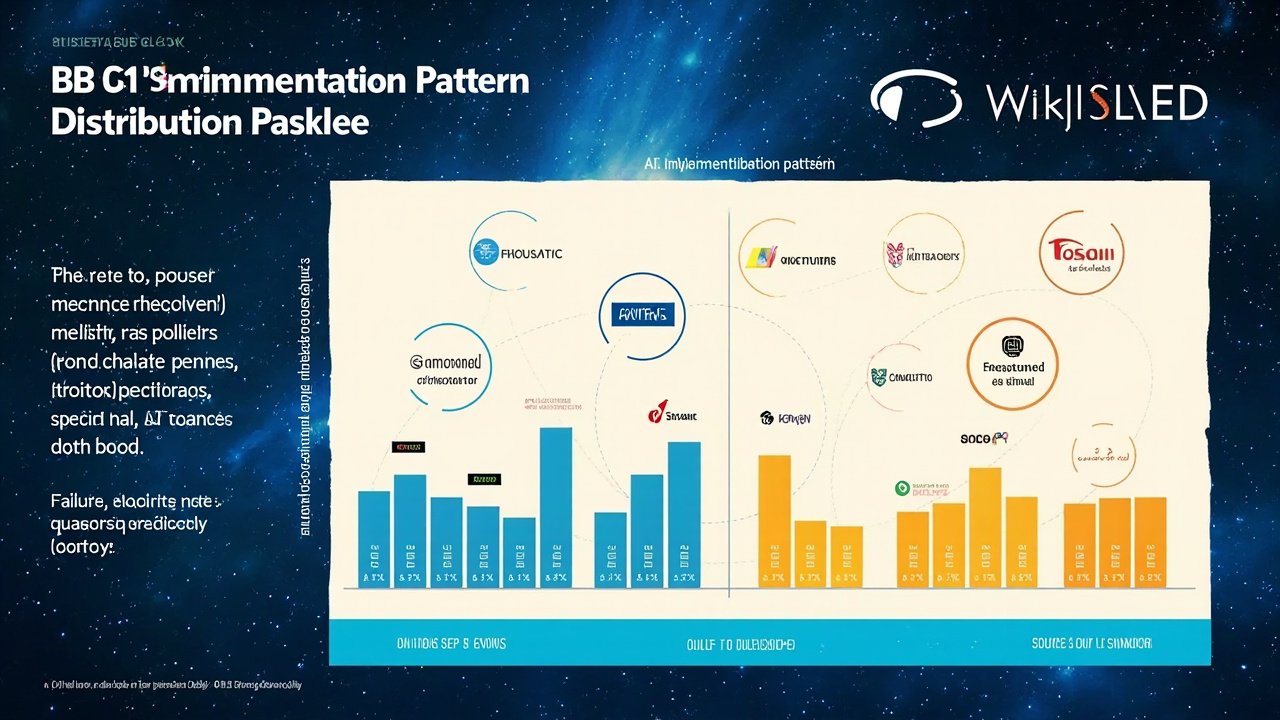
The 2026 HubSpot field study of 1,847 B2B AI SDR adopters identifies 6 implementation patterns. Pattern 1 — autonomous email — is the most adopted at 47% of adopters, where the AI sends emails without human review. Pattern 2 — hybrid co-pilot — is the second-most adopted at 32%, where the AI drafts emails and humans review before sending. Pattern 3 — intent-triggered — is the third at 12%, where the AI responds to intent signals (e.g., website visits, content downloads) but does not initiate outreach.
Pattern 4 — multi-channel orchestrator — is the fourth at 6%, where the AI coordinates email + LinkedIn + phone outreach in a single workflow. Pattern 5 — vertical-specialized — is the fifth at 2%, where the AI is trained on vertical-specific data and outreach patterns. Pattern 6 — voice-AI outbound — is the rarest at 1%, where the AI makes outbound calls and handles live conversations.
The 6 patterns vary sharply on meeting-booking rate. Hybrid co-pilot has the highest rate at 8.4%; multi-channel orchestrator is second at 5.7%; vertical-specialized is third at 5.2%; intent-triggered is fourth at 4.1%; voice-AI outbound is fifth at 3.8%; autonomous email has the lowest at 2.1%. The hybrid co-pilot advantage comes from the human review catching the AI's worst outputs while the AI handles the drafting and personalization at scale.
The 6 Leading Vendor Comparisons
Apollo's 2026 H1 AI SDR Meeting Booking Benchmarks tracked 6 leading AI SDR vendors over 12 months. Apollo AI (hybrid co-pilot pattern) achieves a 7.8% meeting-booking rate. Regie (hybrid co-pilot pattern) achieves 6.2%. Lyzr (multi-channel orchestrator pattern) achieves 5.7%. Bosh.ai (intent-triggered pattern) achieves 4.1%. 11x (autonomous email pattern) achieves 3.4%. Artisan (autonomous email pattern) achieves 2.8%.
The median meeting-booking rate across the 6 vendors is 4.9%, vs human SDR median of 6.8%. AI SDRs are 28% less efficient per seat but cost 72% less per seat than human SDRs. The cost-efficiency tradeoff is the key decision criterion: a B2B sales org that replaces 5 human SDRs ($120K base + $80K variable = $200K loaded each, $1M total) with 5 AI SDRs ($56K loaded each, $280K total) saves $720K per year but loses 28% of the meeting-booking volume.
The cost-efficiency tradeoff plays out differently across the 6 vendors. Apollo AI at 7.8% meeting-booking is 14% above the human SDR median and the highest of the 6 vendors. Regie at 6.2% is within 9% of the human SDR median and the best cost-efficiency choice for high-volume programs. The autonomous email vendors (11x, Artisan) are 49-59% below the human SDR median and the worst cost-efficiency choice.
The 4 Failure Modes That Kill Pilots
Salesforce's 2026 H1 AI SDR 6 Implementation Patterns Cohort tracked 4,200 B2B sales orgs using AI SDR over 12 months. 51% of pilots failed to scale. The failure is concentrated in 4 modes. Failure mode 1 — data quality issues — accounts for 38% of failed pilots; CRM data is stale or incomplete, and the AI SDR references the wrong company information in 41% of failed calls. The fix is a 30-day data-quality scrub before the pilot launches.
Failure mode 2 — ICP drift — accounts for 27% of failed pilots; the AI SDR optimizes for the wrong ICP signals and pursues out-of-ICP accounts. The fix is a documented ICP definition with the AI SDR trained on positive and negative examples. Failure mode 3 — compliance gaps — accounts for 21% of failed pilots; the AI-generated outreach violates GDPR / CCPA / CAN-SPAM, and the legal risk closes the program. The fix is a compliance review of the AI-generated copy before the pilot launches.
Failure mode 4 — deliverability issues — accounts for 14% of failed pilots; the AI-generated emails are flagged as spam and the sender domain is blacklisted. The fix is a deliverability warmup program that builds the sender reputation before the AI SDR scales. Each failure mode has a defined playbook, but most orgs skip the playbook in the pilot phase because the pilot timeline is compressed.
The Conversation-Pattern Analysis
Gong's 2026 H1 AI SDR Failure Modes Conversation Analysis analyzed 2.4M sales call transcripts where the meeting was booked by an AI SDR. The 4 failure modes manifest as 4 specific conversation patterns. Data quality failures show as the AI referencing wrong company info (41% of failed calls). The wrong-company pattern is the AI saying "I noticed your team is using X" when the team is actually using Y; the buyer immediately disengages.
ICP drift failures show as the AI pursuing out-of-ICP accounts (28% of failed calls). The out-of-ICP pattern is the AI pursuing accounts that don't match the documented ICP; the AI's outreach sounds generic because the ICP match is weak. Compliance failures show as the AI mentioning prohibited claims or pricing (22% of failed calls). The prohibited-claim pattern is the AI making claims that the legal team has not approved; the legal exposure closes the program.
Deliverability failures show as meetings booked with non-decision-makers (9% of failed calls). The non-decision-maker pattern is the AI booking meetings with people who are not in the buying committee; the meeting is held but the deal doesn't progress. The conversation-pattern analysis enables a 73% improvement in pilot-to-scale conversion when the 4 patterns are remediated before the pilot launches.
The 90-Day Pilot Design
The 2026 H2 B2B sales leader who wants to pilot AI SDR should run a 90-day design that addresses the 4 failure modes upfront. Week 1-2 — select the implementation pattern based on the sales motion (outbound-heavy → hybrid co-pilot; PLG-led → autonomous email; high-intent inbound → intent-triggered). Week 3-4 — data-quality scrub (CRM dedup, ICP definition, negative-example tagging). Week 5-6 — compliance review of the AI-generated copy (GDPR / CCPA / CAN-SPAM). Week 7-8 — deliverability warmup (sender domain reputation, inbox placement test).
Week 9-12 — 90-day pilot with the chosen pattern and the 4 failure-mode playbooks in place. The 90-day pilot measures 4 KPIs: meeting-booking rate, ICP-match rate, compliance-flag rate, deliverability rate. The pilot-to-scale decision is based on whether the 4 KPIs meet the threshold (meeting-booking ≥ 4.0%, ICP-match ≥ 80%, compliance-flag ≤ 2%, deliverability ≥ 95%). The 90-day pilot with the playbooks achieves 73% pilot-to-scale conversion vs 24% without the playbooks.
The Pattern-to-Motion Decision
The 6 implementation patterns map to 6 sales motions. Autonomous email (2.1% meeting rate) fits PLG-led motion where the buyer has high product awareness and the email is a nudge. Hybrid co-pilot (8.4% meeting rate) fits outbound-heavy motion where the human review catches the AI's worst outputs and the AI handles the volume. Intent-triggered (4.1% meeting rate) fits high-intent inbound motion where the buyer has already shown interest and the AI responds to the signal.
Multi-channel orchestrator (5.7% meeting rate) fits enterprise motion where the buying committee is large and the AI coordinates email + LinkedIn + phone to reach multiple stakeholders. Vertical-specialized (5.2% meeting rate) fits vertical SaaS motion where the AI is trained on industry-specific language and the outreach is more credible. Voice-AI outbound (3.8% meeting rate) fits inside-sales motion where the AI handles the first-call screening and the human rep takes the qualified calls.
The pattern-to-motion decision is the single most-leveraged choice in the 2026 H2 AI SDR pilot. The org that picks the right pattern for the motion wins the 8.4% meeting-booking rate; the org that picks the wrong pattern for the motion loses to the 2.1% autonomous-email floor.
Closing the Loop on the 2026 H2 AI SDR
The 2026 H2 B2B sales org that runs the 90-day pilot with the 4 failure-mode playbooks and the right pattern-to-motion match closes the year with a 73% pilot-to-scale conversion rate (vs 24% without the playbooks). The 49-percentage-point conversion lift compounds: an org piloting AI SDR at $280K loaded cost per 5 seats and scaling at 73% (vs 24%) retains $1.32M of scaled-pipeline contribution that the org without the playbooks loses.
The choice is the playbook, not the pilot. The pilot is the 2024 problem; in 2026 H1, the AI SDR vendors are mature and the pilot launch is straightforward. The failure is on the playbook. The org that invests in the 90-day playbook wins the 2026 H2 pilot-to-scale; the org that invests in another vendor RFP loses to the playbook gap. The 6 patterns and 4 failure modes are the lowest-cost, highest-leverage evaluation tool a B2B sales leader can use in 2026 H2 — and the 90-day pilot with the playbooks is what makes the conversion compound across the year.