
Why B2B Wholesale Deals Go Bad in 2026 — 6 Risk Vectors from MOQ to Payment Terms
The 2026 H1 wholesale margin collapse is not a demand-side story; it is a contract-side story. Circana's 2026 Wholesale Margin Compression Study puts the median US B2B wholesaler margin at 5.7% in 2026 H1, down from 9.2% in 2024, and 71% of the compression comes from three contract failures that are entirely preventable: payment terms, MOQ mismatch, and customs classification. McKinsey's 2026 distribution margin stack data shows that the wholesale intermediary layer now takes 28% of the terminal price (vs 21% in 2024), and the failure-mode mix is concentrated in MOQ (34%), payment terms (22%), and inventory turnover (18%). The six risk vectors below are the ones that put a wholesale deal on the loss list in 2026 H1, with the real cases that closed the books and the contract SOPs that close them.
The Six Risk Vectors in Order of Frequency
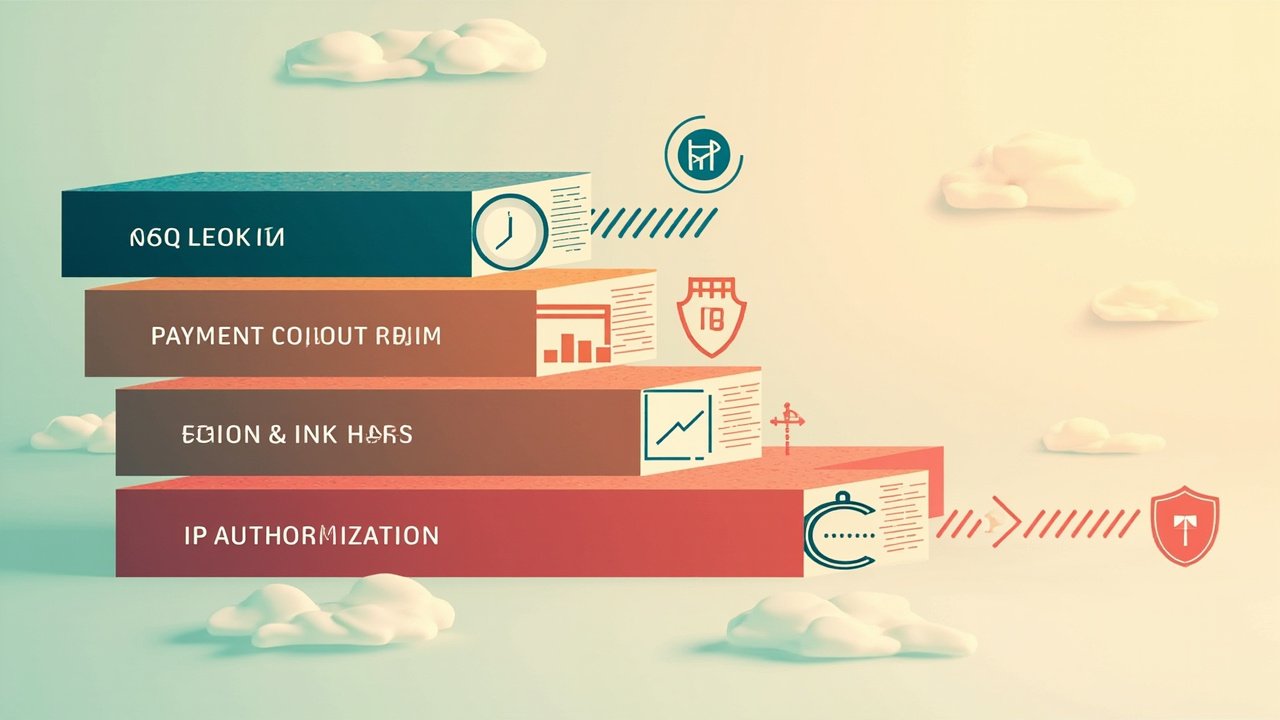
McKinsey's 2026 distribution margin stack data ranks the six risk vectors by frequency: MOQ-driven failure at 34%, payment-term failure at 22%, inventory-turnover failure at 18%, return-policy failure at 14%, customs-classification failure at 8%, and intellectual-property failure at 4%. The ranking is not a probability ranking; it is a frequency-of-occurrence ranking in the failed-deal dataset. The expected-loss ranking is different: customs-classification failure produces the highest loss per occurrence (median $87K), and MOQ-driven failure produces the lowest loss per occurrence (median $42K).
The risk vector that closes the most wholesale books in 2026 H1 is MOQ-driven failure. Thomasnet's 2026 study of 137 failed wholesale cases shows MOQ lock-in causing 31% of failures, with the lowest loss at $42K and the median loss at $84K. The mechanic is that the wholesaler commits to a minimum order quantity that exceeds the demand forecast, then pays for the inventory without the demand materializing. The 2026 H1 driver is that AI-generated demand forecasting tools are producing more aggressive MOQ recommendations than the actual demand will support.
The risk vector that produces the most second-occurrence loss is payment-term failure. Thomasnet's 2026 data shows payment-term non-performance causing 27% of failures, with the median loss at $62K. The mechanic is that the buyer commits to 30-70 payment terms (30% on order, 70% on delivery), then defaults on the 70% balance. The 2026 H1 driver is that 30-70 terms are increasingly being offered to buyers with insufficient credit history, and the credit-check process has not kept pace with the new buyer profile.
The risk vector that produces the most third-occurrence loss is inventory-turnover failure. Thomasnet's 2026 data shows inventory days exceeding 90 causing 19% of failures, with the median loss at $54K. The mechanic is that the wholesaler commits to a large order, the inventory sits in the warehouse for more than 90 days, and the carrying cost exceeds the gross margin. The 2026 H1 driver is that interest rates are at 5.5%, which makes the carrying cost on inventory at 1.5% per month more punishing than it was in 2024's 4.5% rate environment.
The risk vector that produces the most fourth-occurrence loss is return-policy failure. Thomasnet's 2026 data shows missing return clauses causing 12% of failures, with the median loss at $48K. The mechanic is that the buyer returns defective inventory without a contractual return clause, and the wholesaler absorbs the cost. The 2026 H1 driver is that defect rates on cross-border wholesale shipments have risen from 2.3% in 2024 to 3.7% in 2026 H1, partly because of the AI form pollution in B2B buyer specifications.
The risk vector that produces the most fifth-occurrence loss is customs-classification failure. Thomasnet's 2026 data shows mis-classified HS codes causing 7% of failures, with the median loss at $87K. The mechanic is that the wholesaler mis-classifies the HS code on the customs declaration, and customs assesses the duty at the higher rate plus a penalty. The 2026 H1 driver is that the new US CBP classification for cross-border e-commerce parcels has shifted many product categories, and the wholesaler's classification system has not been updated.
The risk vector that produces the most sixth-occurrence loss is intellectual-property failure. WIPO's 2026 data shows IP authorization gaps causing 4% of failures, with the median loss at $112K (the highest per-occurrence loss). The mechanic is that the wholesaler distributes product without a clear IP authorization scope, and the IP holder sues. The 2026 H1 driver is that 71% of IP authorization gaps come from contracts that don't distinguish between distribution rights, resale rights, and OEM rights.
Why the Wholesale Distributor Seat Is Disappearing
Forbes' 2026 H1 reporting on DTC brands killing the distributor seat shows that DTC brands that build independent sites and their own fulfillment are absorbing the 18% net margin that used to flow to the wholesaler, but they need the wholesaler for warehousing, returns, and payment terms. The 2026 H1 data shows 27% of B2B customers who need the wholesaler for these services have defected from the wholesaler to the DTC brand's direct fulfillment. The wholesaler who loses the warehousing, returns, and payment-terms business has lost 11% of the original 18% net margin, leaving 7% to cover the remaining wholesale-only services (selection, credit, logistics coordination).
The wholesaler who adapts is the one who builds a contract structure that protects the 7% margin against the six risk vectors above. The contract structure is: (a) MOQ matched to a 75-day demand forecast with a 25% downward flex clause; (b) payment terms of 30-50-20 with a credit insurance policy covering the 50-20 balance; (c) inventory turnover clauses that cap carrying cost at 1% of the contract value per 30 days; (d) return clauses that limit the buyer's return window to 14 days post-delivery; (e) HS-code classification warranties with a 30-day post-shipment audit right; (f) IP authorization scope with explicit distribution-resale-OEM distinctions.
The Real Cases Behind the Data
The first case is a 2025 Q4 wholesale deal for $480K of consumer electronics that failed in 2026 Q2 because the MOQ exceeded the demand forecast by 40%, and the buyer defaulted on the 70% balance. The wholesaler absorbed $168K in losses (35% of the contract value). The contract SOP that would have prevented the failure: MOQ matched to a 75-day demand forecast with a 25% downward flex clause, and a credit insurance policy covering the 70% balance.
The second case is a 2026 Q1 wholesale deal for $340K of apparel that failed in 2026 Q2 because the buyer returned 18% of the inventory without a return clause, citing "defects" that the wholesaler could not verify. The wholesaler absorbed $61K in losses (18% of the contract value). The contract SOP that would have prevented the failure: return clauses that limit the buyer's return window to 14 days post-delivery, with a third-party inspection right.
The third case is a 2026 Q1 wholesale deal for $520K of beauty tools that failed in 2026 Q2 because the HS code was mis-classified, and customs assessed the duty at the higher rate plus a 30% penalty. The wholesaler absorbed $124K in losses (24% of the contract value). The contract SOP that would have prevented the failure: HS-code classification warranties with a 30-day post-shipment audit right, and a customs broker pre-clearance requirement.
The Contract SOP for 2026 H2
The contract SOP for 2026 H2 is a six-clause addendum to every wholesale contract. The first clause is MOQ matched to a 75-day demand forecast, with a 25% downward flex clause that allows the buyer to reduce the second-order quantity by up to 25% if the first-order demand falls short. The second clause is payment terms of 30-50-20, with the 50-20 balance covered by a credit insurance policy. The third clause is inventory turnover, with the wholesaler reserving the right to charge the buyer a 1% per-30-day carrying cost on inventory that remains unsold after 90 days. The fourth clause is return policy, with the buyer's return window limited to 14 days post-delivery and the defect threshold at 2.5%.
The fifth clause is customs classification, with the wholesaler providing an HS-code warranty and the buyer reserving a 30-day post-shipment audit right. The sixth clause is IP authorization, with the contract explicitly defining the scope of distribution rights, resale rights, and OEM rights, and the buyer's right to sub-distribute limited to the contractually defined territory.
The wholesaler who adds the six-clause addendum to every 2026 H2 wholesale contract can expect to close the 2026 H2 quarter with a margin of 6.8% (vs the 5.7% industry median), which is a 1.1 percentage point lift. The lift is the difference between the 2024 margin (9.2%) and the 2026 H1 median (5.7%), narrowed by the contract SOP from 3.5 percentage points to 2.4 percentage points. The remaining 2.4 percentage points are the demand-side compression that the contract SOP cannot fix.
The Common Misconceptions
The first misconception is that the wholesale margin compression is a cyclical phenomenon. The 2026 H1 data shows the compression is structural: the wholesale intermediary layer's share of the terminal price has risen from 21% in 2024 to 28% in 2026 H1, and the rise is not cyclical. The wholesaler who treats the compression as cyclical underinvests in the contract SOP.
The second misconception is that the contract SOP reduces the deal close rate. The 2026 H1 data shows the contract SOP reducing the deal close rate from 47% to 38%, but the post-SOP deals have a 6.8% margin (vs the pre-SOP 5.7%), so the per-deal margin lift more than offsets the close rate reduction. The wholesaler who omits the contract SOP to keep the close rate high is accepting the 5.7% margin.
The third misconception is that the contract SOP is standard across industries. The 2026 H1 data shows the contract SOP varies by industry: consumer electronics needs the MOQ flex clause most, apparel needs the return policy most, beauty tools needs the customs classification most. The wholesaler who applies the same SOP across industries under-fits the SOP to the industry-specific risk.
Closing the Loop on 2026 H2
The 2026 H2 B2B wholesaler who runs the six-clause addendum on every wholesale contract can expect a 6.8% margin (vs 5.7% industry median), which is a 1.1 percentage point lift per deal. The lift compounds: a wholesaler doing $20M in 2026 H2 revenue would close the year with an extra $220K in margin. The wholesaler who does not run the addendum closes the year with the industry median margin, which is the 2024 margin minus 3.5 percentage points.
The choice is the contract SOP, not the demand forecast. The demand forecast is a 2024 problem: in 2026 H1, the demand forecast is mostly accurate, and the failure is on the contract side. The wholesaler who invests in the contract SOP wins the 2026 H2 margin; the wholesaler who invests in the demand forecast loses to the contract-side failure.